Three-Eyed Seeing
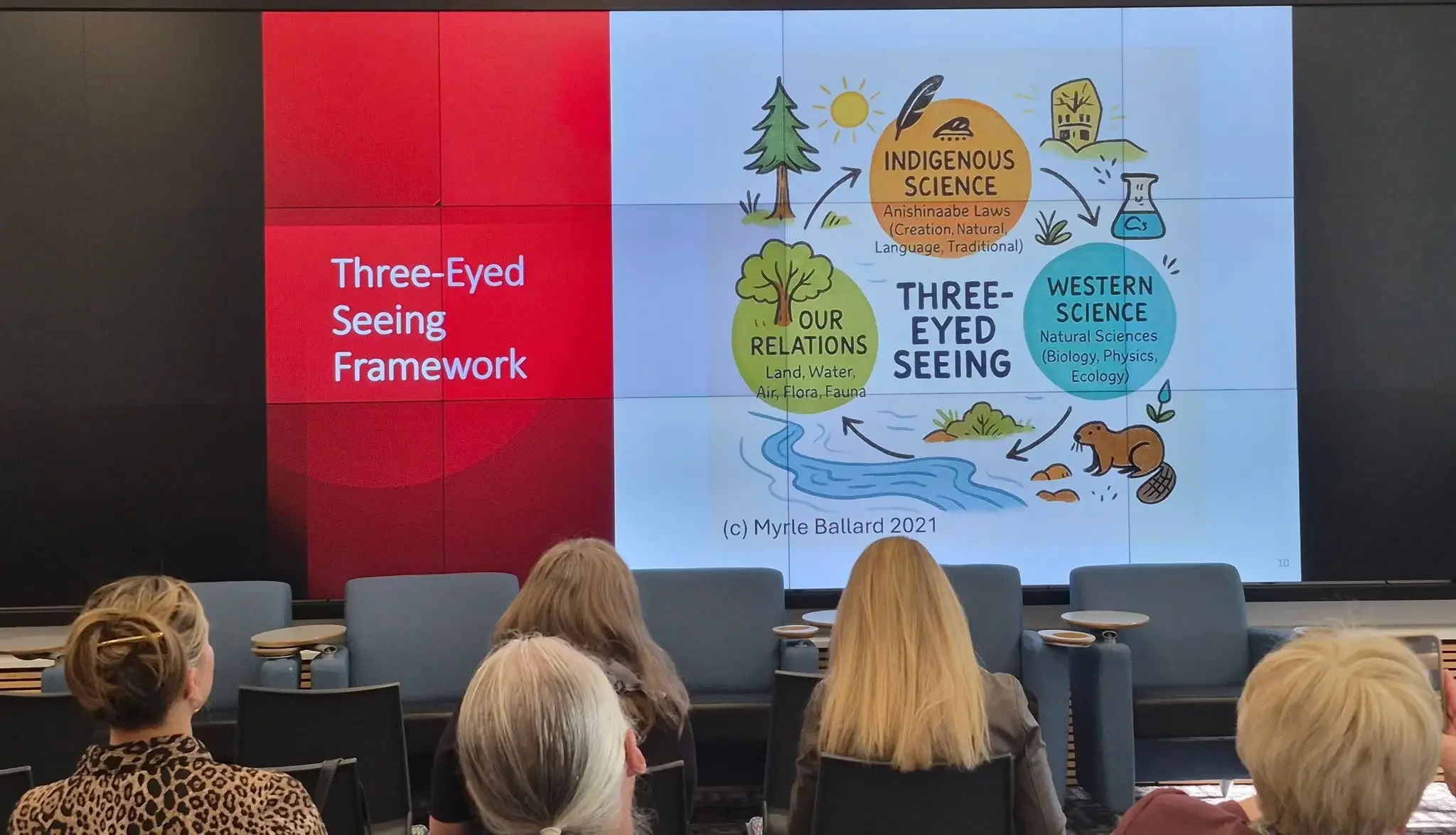
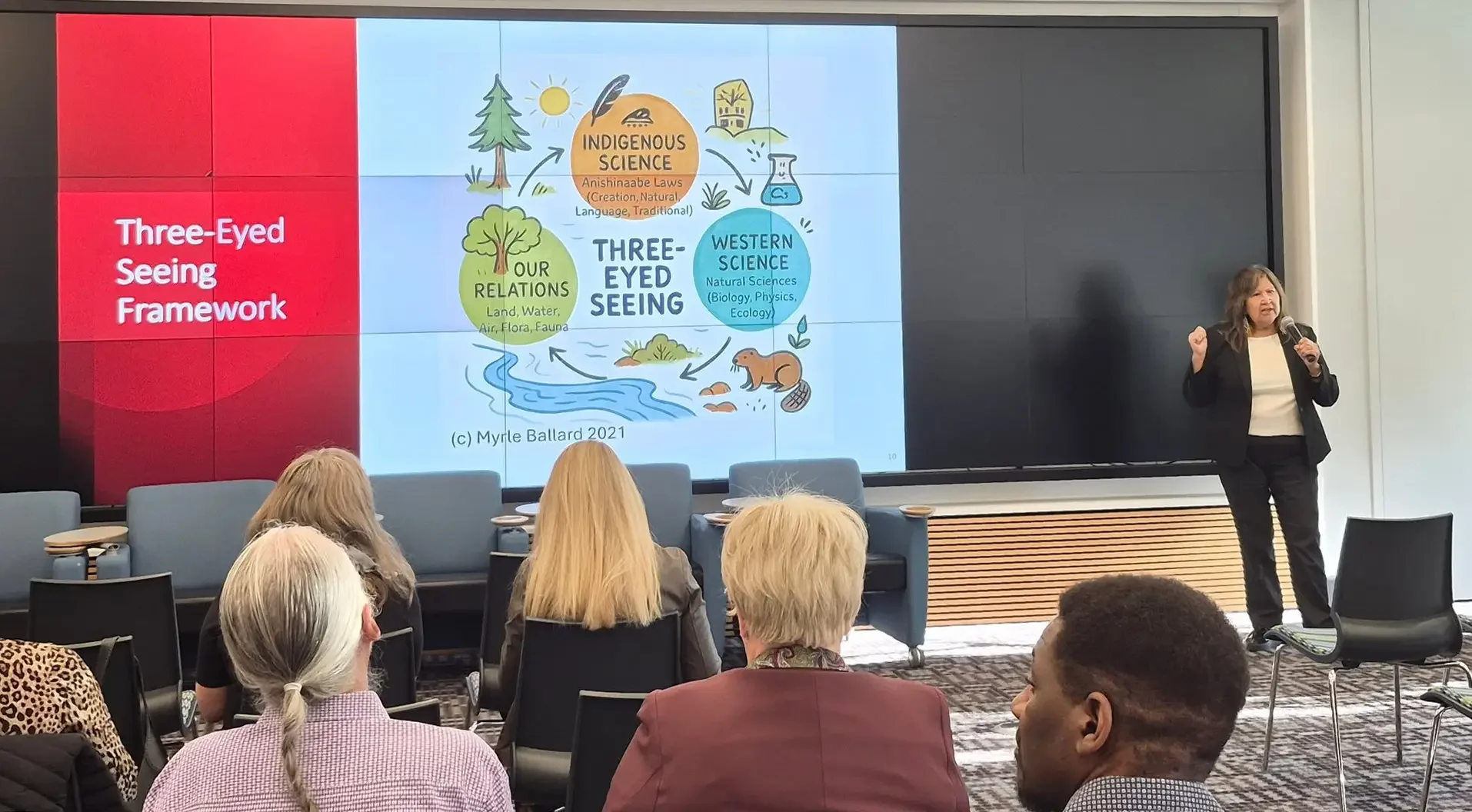
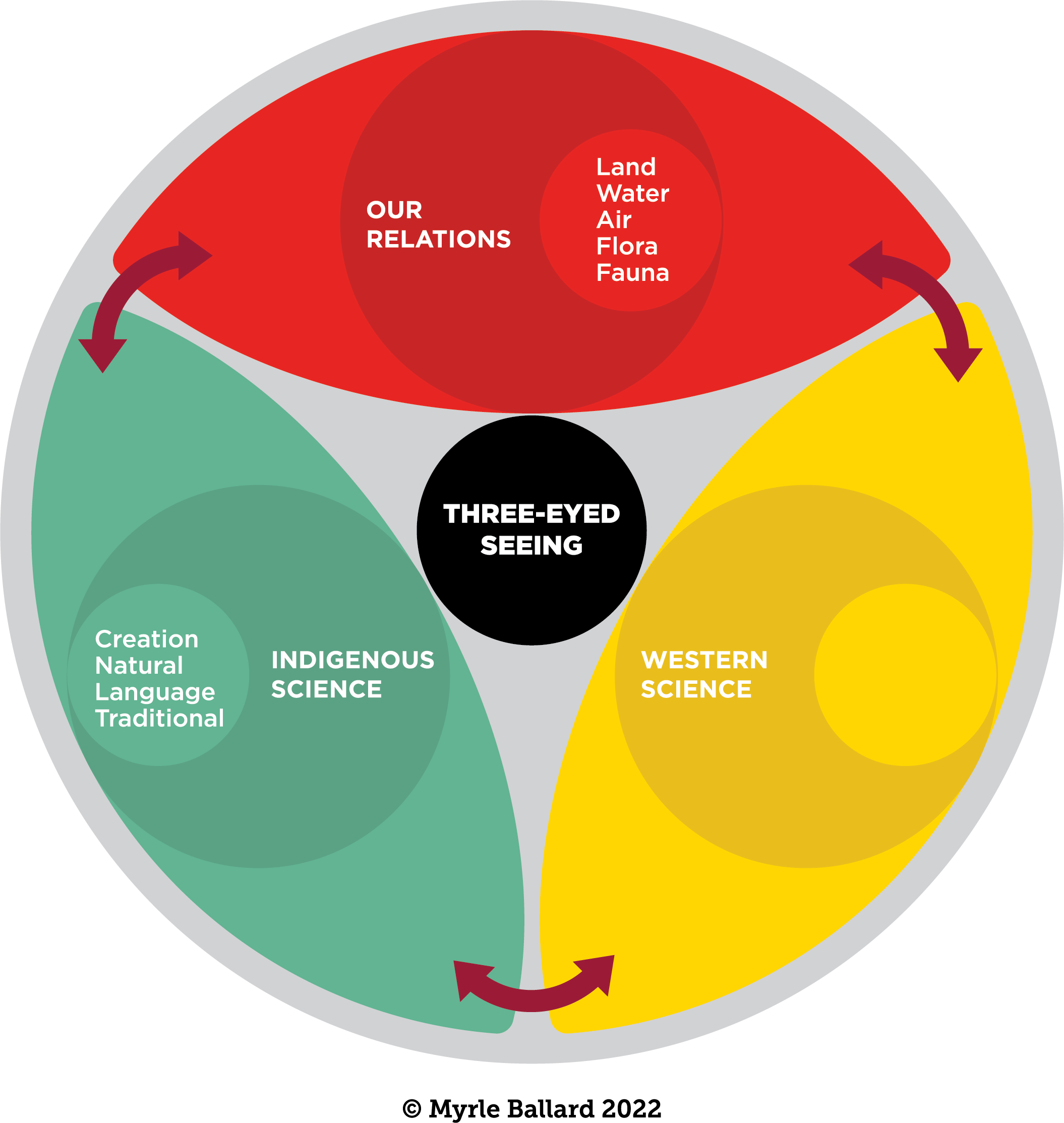
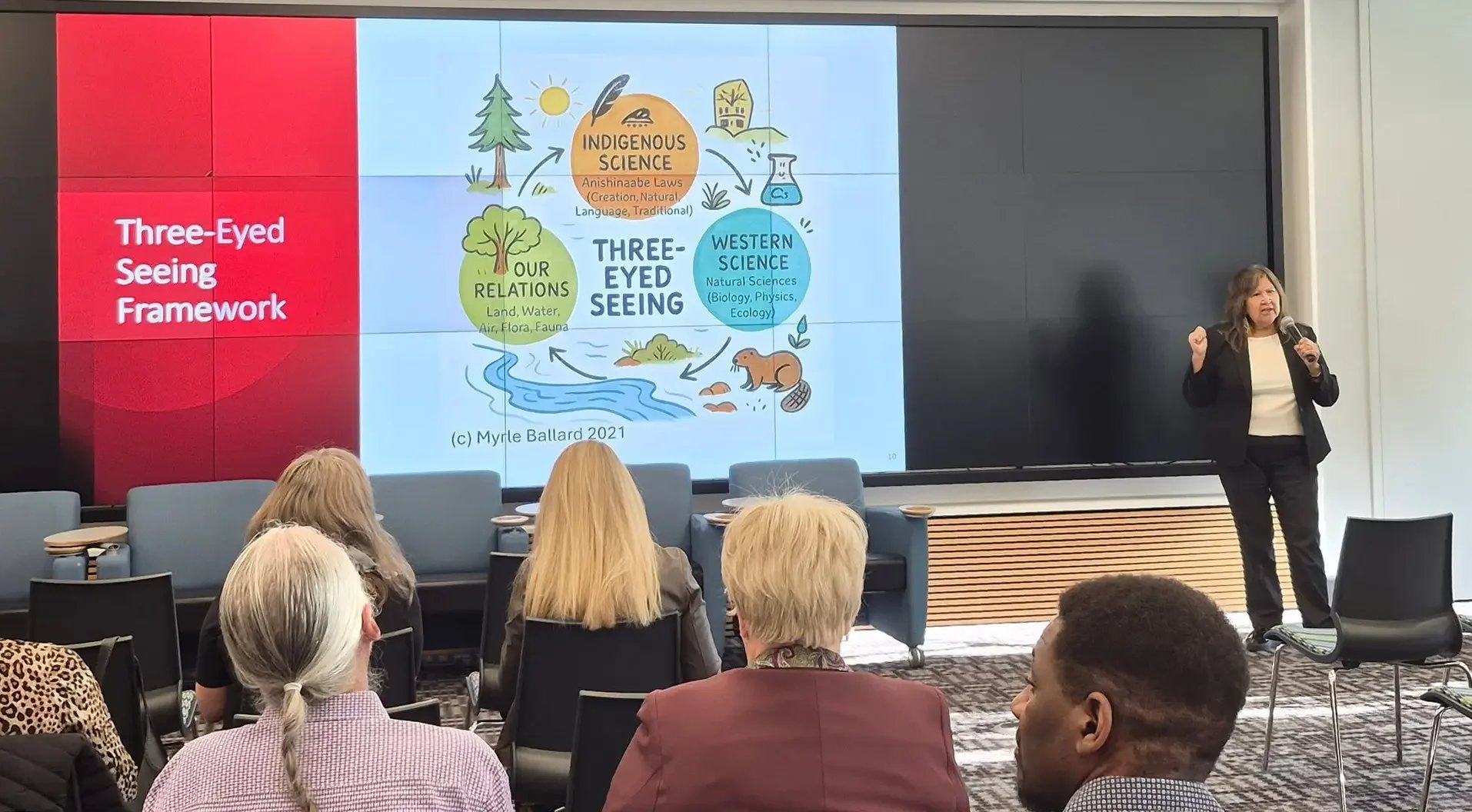
Three-Eyed Seeing extends Two-Eyed Seeing by bringing together Indigenous Science, Western Science, and the perspective of Our-Relations—the living land, waters, plants, animals, and ecosystems with whom humans share responsibility.
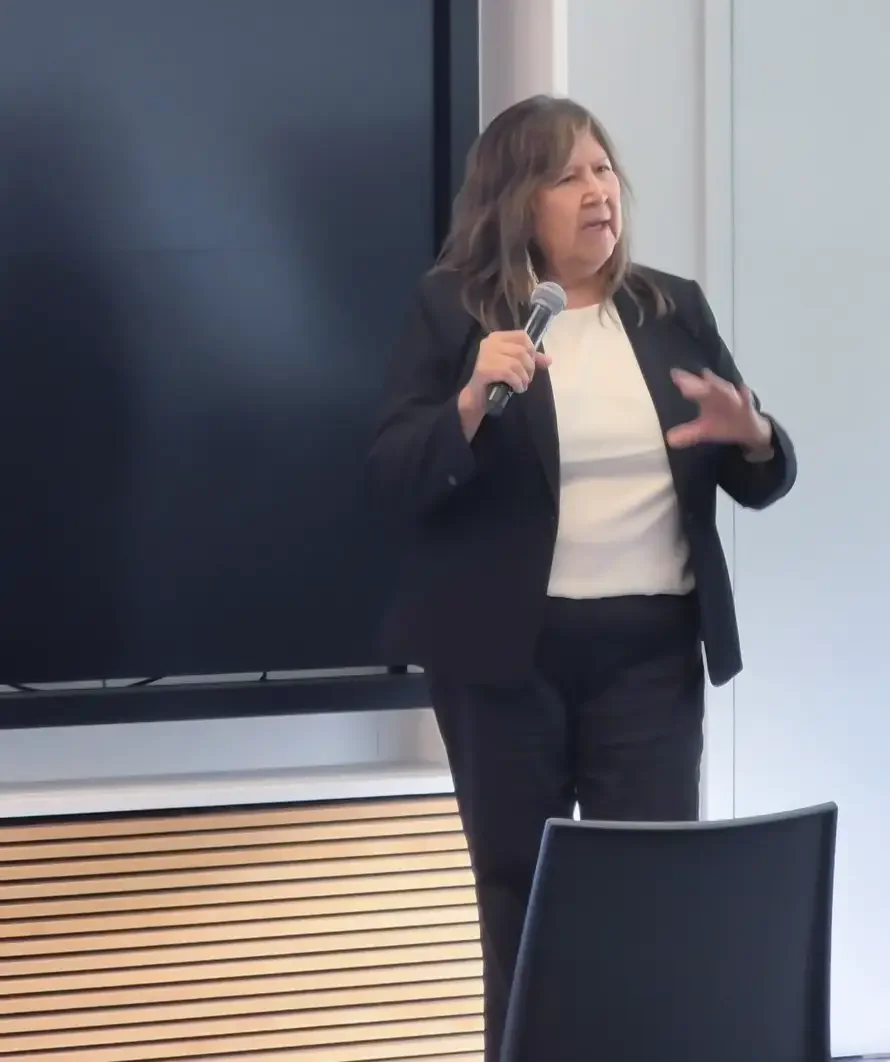
Dr. Myrle Ballard has developed an innovative Three-Eyed Seeing framework for the study of Indigenous Science.
Three-Eyed Seeing extends Two-Eyed Seeing by bringing together Indigenous Science, Western Science, and the perspective of Our-Relations—the living land, waters, plants, animals, and ecosystems with whom humans share responsibility.
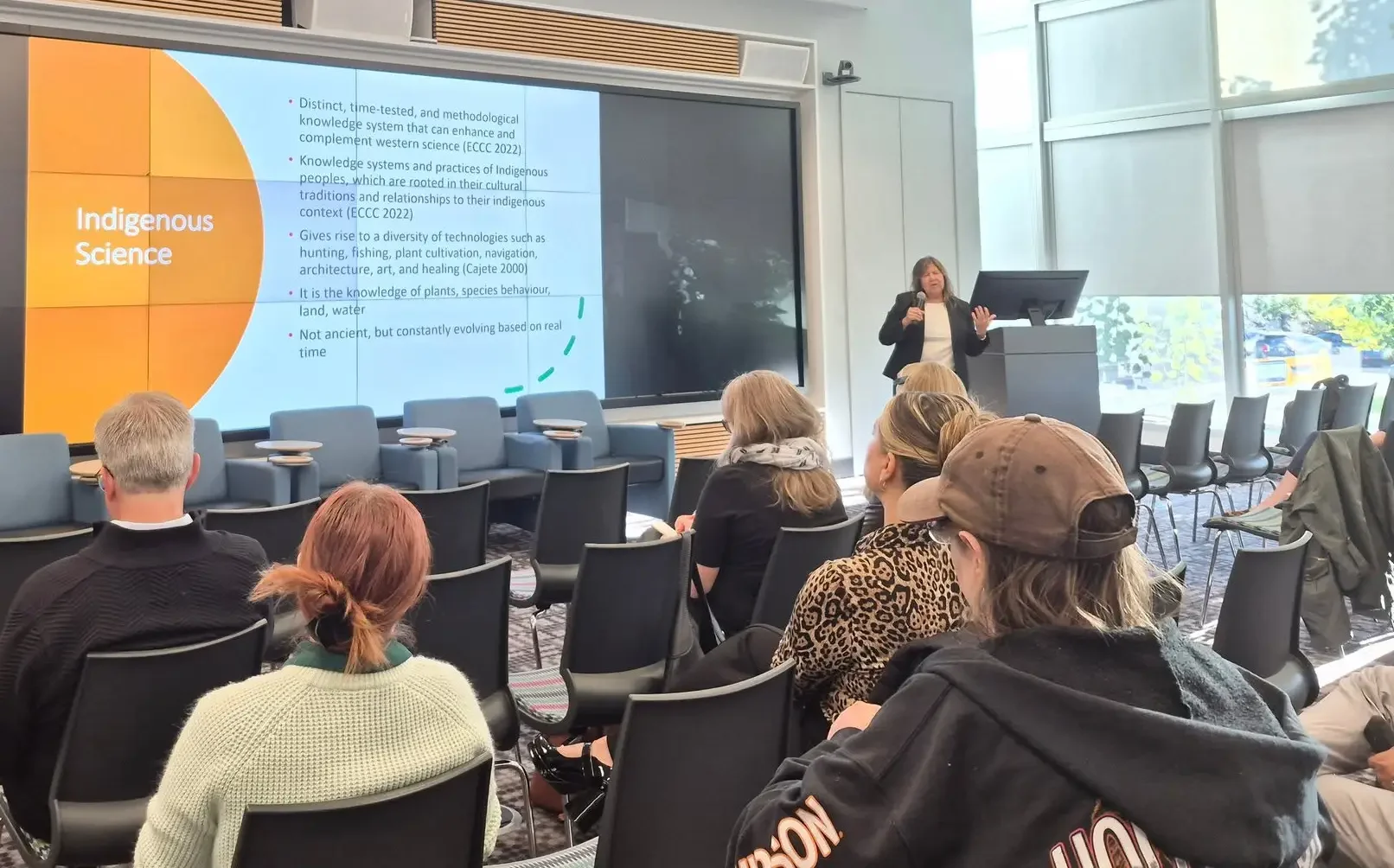
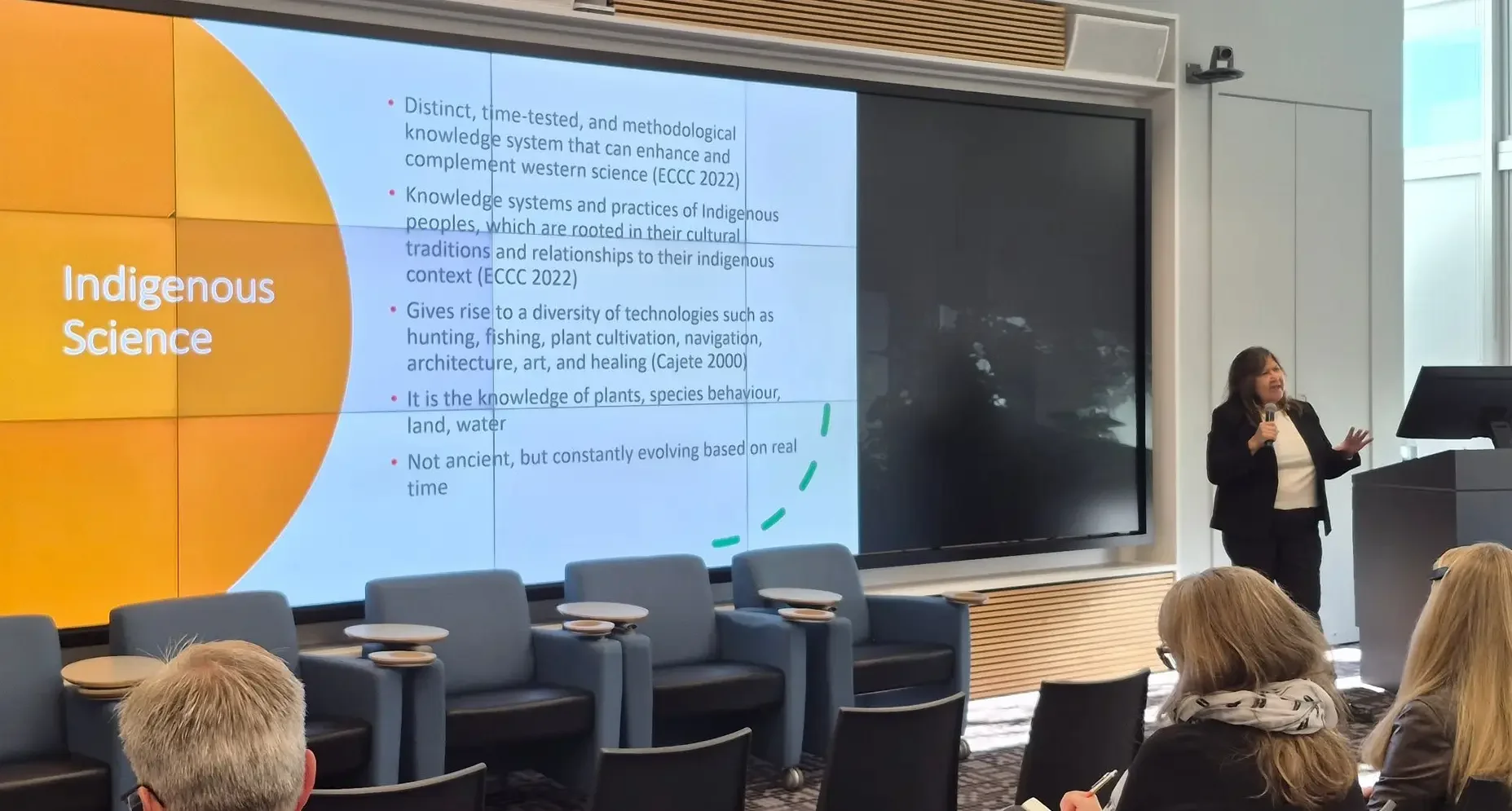
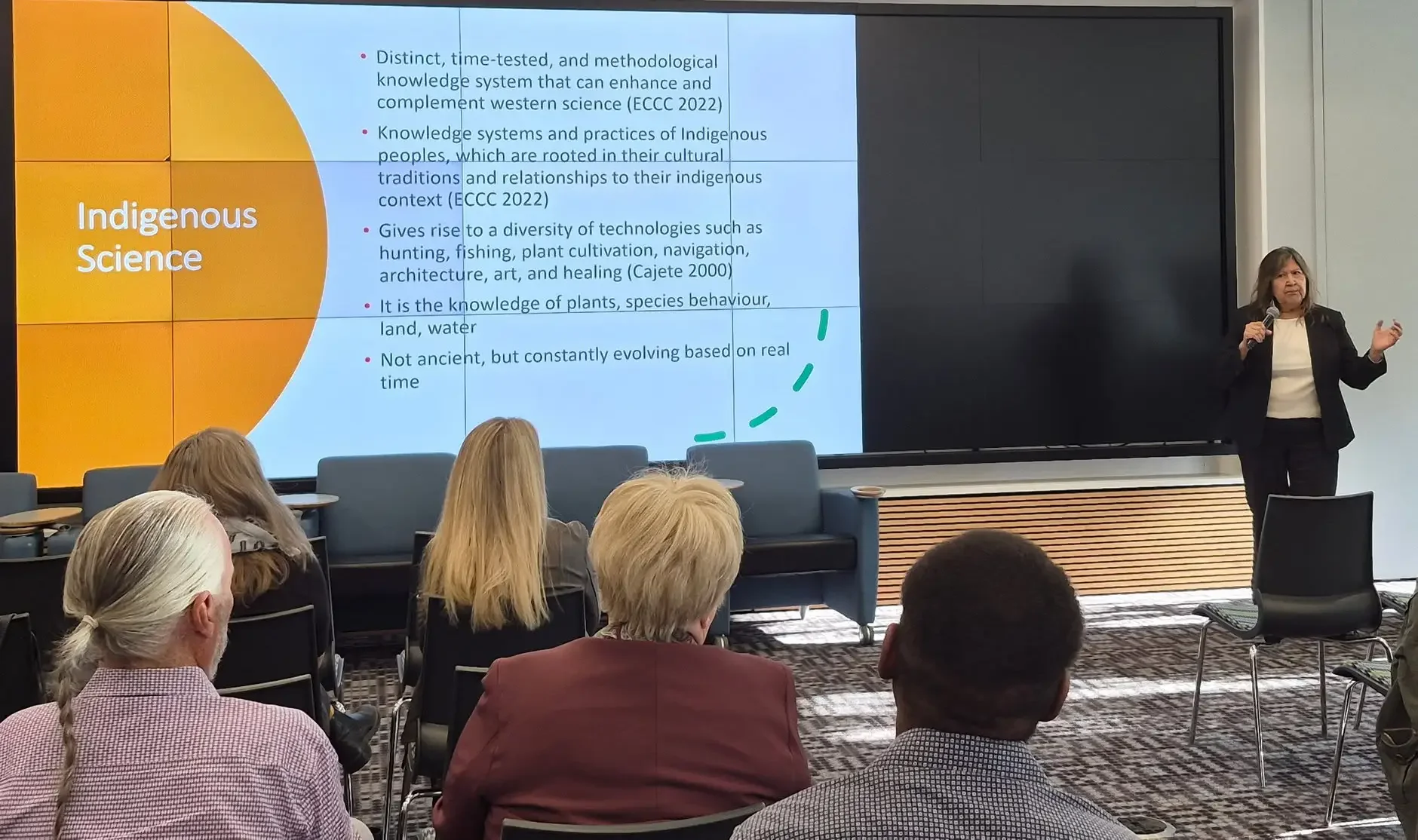
Indigenous Science is explored as a distinct, relational, and methodological knowledge system grounded in land, language, ceremony, and intergenerational responsibility.
Within this framework, there is an understanding of how Western scientific methods contribute empirical tools, and how Our-Relations are recognized as active participants in knowledge production.
Practitioners of Three-Eyed Seeing focus on relational accountability, ethical space, and maintaining the integrity of each knowledge system rather than blending or assimilating them.
Three-eyed Seeing can be applied within an existing scientific area of expertise.
Sustainability Forum
Mount Royal College
November 2025